




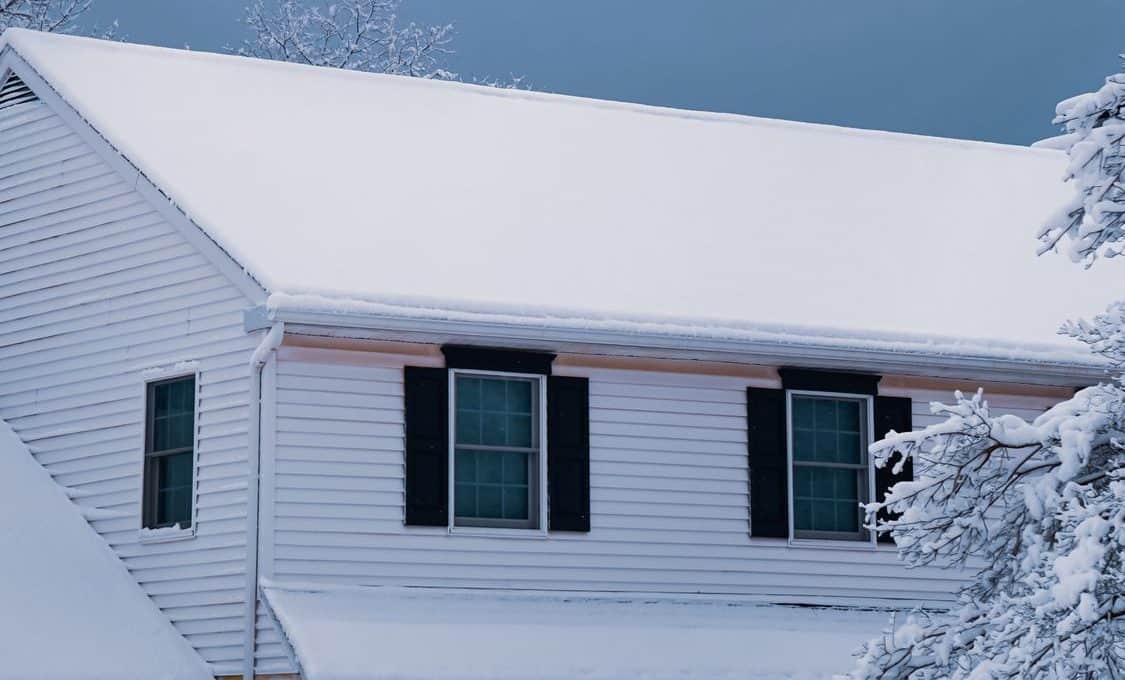
Snow looks harmless sitting on a roof, a postcard rather than a threat. It is not. A heavy, wet snow load, followed by the freeze-thaw cycle that defines a GTA winter, is one of the toughest things a roof endures, and the engineering behind handling it is more exact than most homeowners realize.
The good news is that the rules are well established and the failure modes are understood. A roof built and detailed correctly carries a Mississauga winter without drama; the trouble comes from the details a rushed install skips.
The number in the code
Ontario’s 2024 building code sets the framework for how roofs are designed to carry snow. The minimum specified snow load works out to a 1 kPa minimum, calculated with a formula that accounts for roof shape, exposure, and the importance of the building.
That formula exists because snow does not sit evenly across a roof. It drifts in the wind, it slides on slopes, and it piles up in valleys and against walls and parapets, loading some parts of a roof far more heavily than a simple average would suggest. The design has to account for the worst spot, not the average one.
Why freeze-thaw makes it worse
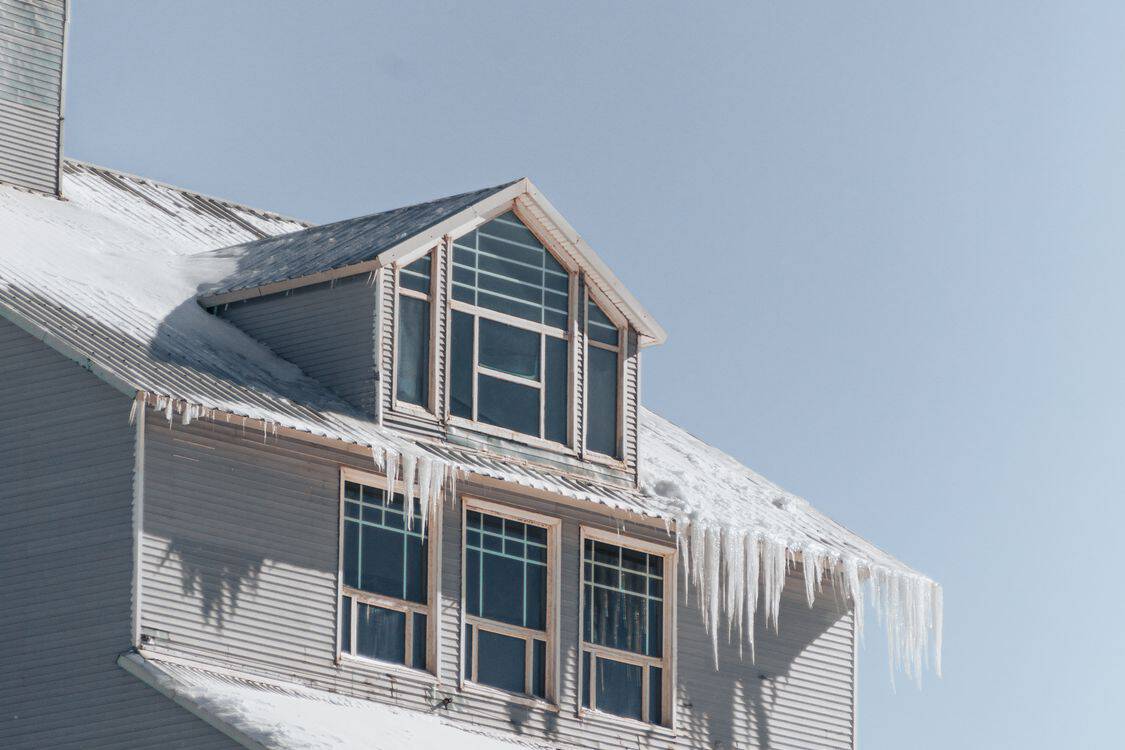
A Mississauga winter rarely stays reliably cold. It swings above and below freezing repeatedly, melting and refreezing the snowpack on the roof and driving the ice-dam cycle that is the real winter threat to most homes.
Heat escaping from an under-insulated or poorly ventilated attic melts snow on the upper roof; the meltwater runs to the cold eave and refreezes into a dam; and the growing dam forces the next round of water back up under the shingles. A roof can carry the structural weight perfectly and still leak, because the load is only half the problem and the meltwater is the other half.
What protects a roof through winter
Surviving a GTA winter comes down to a few things working together. Adequate structure to carry the load is the foundation. Proper attic ventilation keeps the roof deck cold and breaks the melt-refreeze cycle before it starts. And ice-and-water shield, run well past the eave and through the valleys, seals the most vulnerable areas against any water that does back up.
None of this is visible once the roof is finished, which is exactly why it gets trimmed from low-bid jobs to hit a price. The homeowner cannot see whether the membrane runs far enough up the roof or whether the attic actually breathes. That invisibility is why the installer’s reputation carries so much weight; you are effectively trusting the crew to build what you will never be able to inspect.
Winter sorts the corner-cutters
The reliable pattern is that winter exposes whatever was skipped. A roof that looked identical to its neighbour in October behaves very differently in February if the ventilation was inadequate or the ice membrane was short.
For a Mississauga homeowner, the lesson is to treat a re-roof as a chance to get the snow-and-ice detailing right for the next two decades, and to hire accordingly. The structure, ventilation, and membrane decisions made on installation day are what decide whether the roof carries winter quietly or springs a leak the homeowner cannot explain.